
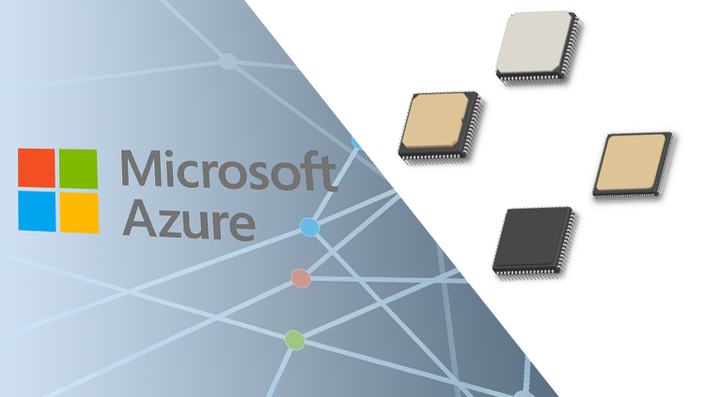
Embedded Azure Cloud <> Python Gateway Communication
Empowering Embedded Devices with Cloud Storage : Azure Cloud
Watch Promo
Microsoft Azure is one of the three leading giants in the cloud service industry, sharing the stage with AWS and Google Cloud.
With its vast array of services and robust infrastructure, Azure has earned a reputation as a preferred choice for IoT solutions across industries. This course provides you with an opportunity to understand why and how.
This course offers:
An Overview of Microsoft Azure:
Familiarize yourself with Azure, from creating storage accounts to configuring dependencies and access keys.
Working with Azure Storage:
Learn to handle Azure storage effectively. Discover how to create containers, upload and download files, and even manage container deletion.
In-depth Understanding of Azure CosmosDB NoSQL Database Service:
Dive into CosmosDB, Azure's NoSQL database service. Learn to create databases and containers, insert and retrieve data, preparing you for real-world IoT data management.
Building an Embedded Azure Cloud Storage System:
Put your knowledge into practice by storing sensor data into local CSV files, pushing these files to Azure storage containers, and storing real-time sensor data in CosmosDB.
Considerations for Azure Usage:
Understand the key considerations when using Azure storage and CosmosDB, including pricing, scalability, and more.
Whether you're new to IoT, a seasoned professional seeking to enhance your skills, or a tech hobbyist, this course will equip you with the knowledge and expertise to implement IoT solutions using Azure. Join us on a fascinating exploration of the Azure ecosystem, and step confidently into the future of IoT.
Frequently Asked Questions
Your Instructor
EmbeddedExpertIO represents a vibrant collective dedicated to the mastery of sophisticated embedded systems software development for professionals.
Our core objective is to equip individuals and organizations with the indispensable skills to thrive in the swiftly evolving embedded systems sector. We achieve this by providing immersive, hands-on education under the guidance of seasoned industry specialists. Our ambition is to emerge as the favored learning platform for embedded systems development professionals across the globe.
Course Curriculum
-
StartImportant information about this section
-
StartProgramming : Enabling the Floating Point Unit (FPU) (18:00)
-
StartProgramming : Developing a UART Driver - Analyzing the Documentation (11:35)
-
StartProgramming : Developing a UART Driver - Listing out the steps (4:00)
-
StartProgramming : Developing a UART Driver - Implementing the Init. function (22:13)
-
StartProgramming : Developing a UART Driver - Implementing the Write function (5:39)
-
StartProgramming : Developing a UART Driver - Testing the Driver (6:39)
-
StartProgramming : Developing the System Timebase - Analyzing the Documentation (8:28)
-
StartProgramming : Developing the System Timebase - Implementing the Init. function (9:52)
-
StartProgramming : Developing the System Timebase - The rest of the functions (12:15)
-
StartProgramming : Developing the System Timebase - Testing the Timebase (5:34)
-
StartProgramming : BSP : Listing the out the Required Functions (7:55)
-
StartProgramming : Writing the LED Driver (5:01)
-
StartProgramming : Writing the PushButton Driver (4:00)
-
StartProgramming : Testing the Board Support Package (3:35)
-
StartProgramming : Analyzing the Documentation (5:21)
-
StartProgramming : Listing out the steps for developing the ADC Driver (5:27)
-
StartProgramming : Writing the ADC Initialization function (13:21)
-
StartProgramming : Writing the ADC Read function (14:05)
Embedded Azure Cloud <> Python Gateway Communication
Develop a Python gateway for STM32 sensor readings and work with Azure Storage and Cosmos DB.
About this course
This course divides the system into the device firmware, the Python gateway, and the Azure services it uses. It covers the UART link and a farm monitoring example.
Set up an Azure storage account, work with files and database records, and implement the serial gateway that converts device data into structured readings.
What you’ll be able to do
Explain the STM32-to-Azure data path
- Describe how the device, serial link, and gateway divide the work.
- Distinguish Azure Storage containers from Cosmos DB containers.
- Explain when a reading is represented as a file and when it is a database item.
- Describe how a database, container, and item relate in Cosmos DB.
- Explain how serial frames become structured JSON readings.
- Describe how the stages of the farm example fit into the monitoring workflow.
Build the Azure gateway workflow
- Set up an Azure Storage account with containers.
- Upload, list, and download files from Azure Storage.
- Create a Cosmos DB database and container and practise adding and retrieving items.
- Configure the STM32 firmware to send readings to the gateway.
- Receive and parse the serial data in Python.
- Construct JSON sensor records and write captured readings to a file.